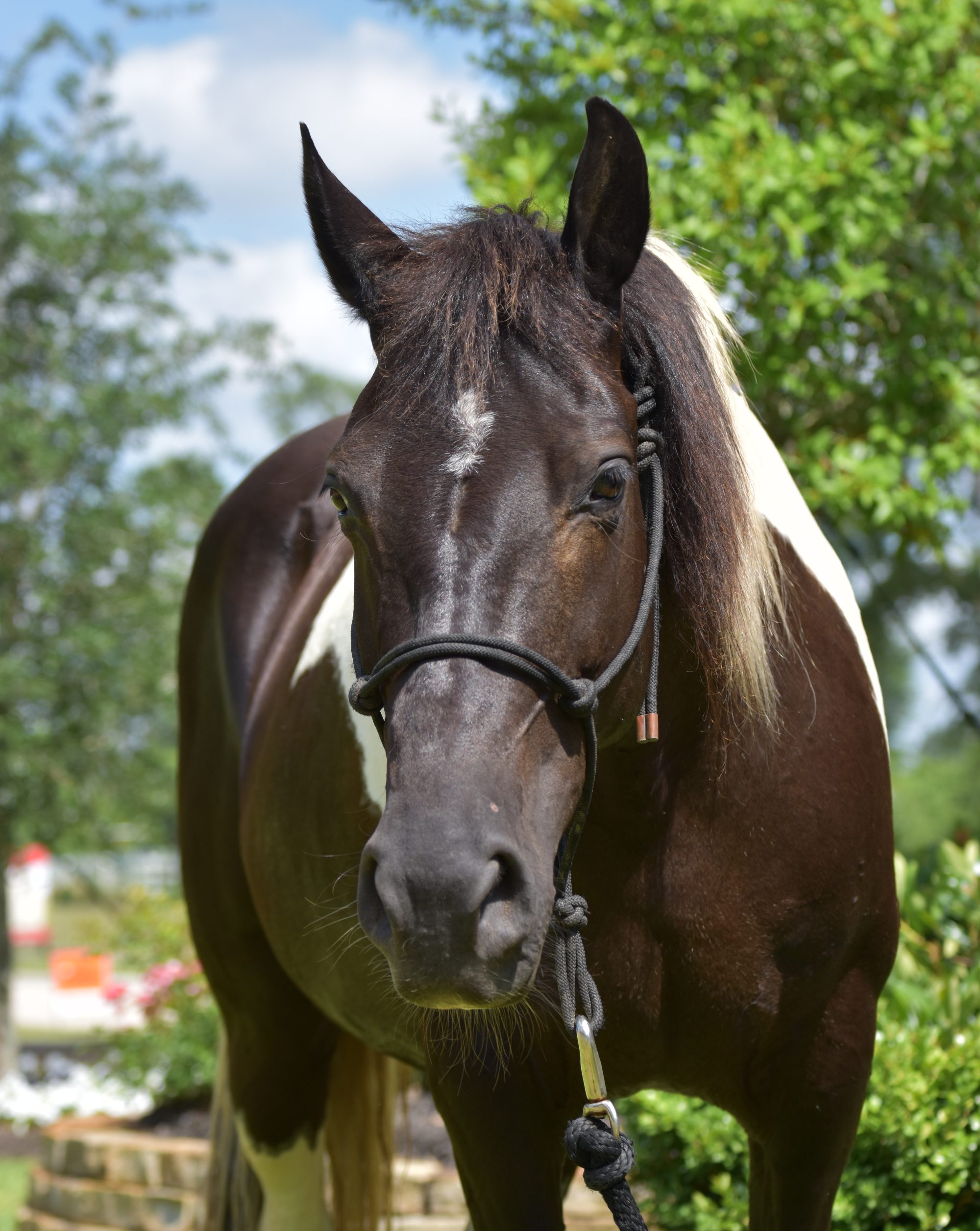


In the previous blogs we talked about approaching two cones that indicate the start and endpoint of the exercise. Every moment in your life can be seen as a block with a beginning, an interval and an end. A simple example, you have to go to the store, the beginning is you go to your car. The interval is, you drive to the store, get groceries and then you drive back home and the end of this block, you arrive home and preferably park your car at the same spot as you always do. Because people are generally quite habitual animals, aren’t we? Let’s go back to horse training, the two cones next to each other indicate the beginning and the end point of the exercise. The first months when we start this training, we always keep this the same and therefore recognizable for the horse. (Unless the horse shows us sooner that its ready for the next step) What the advantages are of this way of training is that the pattern becomes clear for a horse, it knows exactly when the exercise starts and when it ends. This means the horse no longer has to guess how long this will all take, when and where it may stop, etc. You can recognize a guessing horse by, for example, a constant pointing the nose at the exit of the arena or regularly wanting to stop during an exercise. These are questions from the horse and when we systematically ignore them, we teach the horse that asking (communication) doesn’t matter, people do not listen. We may think that the horse is now well-behaved because it no longer does those things, but what really goes on is a horse that has given up communication. By creating a start and endpoint, you will give your horse the tools so they can communicate their needs and give them a sense that they can influence a situation. As I mentioned before, it is important to create an open communication where both you and the horse can put forward ideas. And it is important to realize that the communication from the horse is not a personal attack. But a horse that indicates how it feels and that it needs something to feel better about the situation. And remember, less stress also means more learning ability.
You can use any object as a start and end point, (two buckets, two poles, two blocks of wood) as long as its clear to the horse , any object can do the job. I would keep it the same for the first couple of months and not switch. In the blog about ‘generalization’ I will explain more.
At first, we keep the exercises very simple. Especially when this way of working is new to us, the exercises are mainly meant for us. It’s so we will learn to tune in, we learn to observe, we learn how to use our energy and body. How do you start walking together, take that first step at the same time as the horse. How do you work together in a turn while you are walking on the outside and the horse on the inside and how do you stop together? Where exactly do I start communicating the stop when i want to use only my body language, so that we come to a stop in between the cones?
First you check what speed a horse is willing to give you and you go the same speed. Some horses might walk fast, some painfully slow. Look at it as information about how this horse feels in this moment. A horse might walk fast because it became a habit between the two of you, the horse goes fast, and you keep pulling back on the lead rope. By going with the horse, you are changing something so now the outcome can change as well. When a horse goes slow, it might be a calming signal, a horse that tries to tell you your energy is too high, and it would be better when you slow down and relax first. etc. You will figure out what’s going on when you adapt to the horse. (Remember, step 1, you want to show the horse that you are looking for connection/friendship)
When you feel that the horse is opening itself for connection, you can suggest a different speed with your body (don’t put pressure on the halter rope but by gradually put more or less energy/speed into your body) and see if the horse goes with it. (Remember, step 2, horse goes along with your suggestion) A horse that is opening itself for your suggestions, it feels like a warm energy in your heart. In that moment the horse can still decide not to go with you and is that’s the case, you go back to the speed that the horse was offering. A horse should always be allowed to say NO. In the meantime, think about what happened, was your action too fast and the horse could not follow you? Is the horse not comfortable in the environment? Or maybe a horse just wants to know if it has room to say no. Especially for horses that have never been allowed to say NO, being able to say NO is important to experience and investigate. Show the horse it’s okay by mimicking their speed for a while and then we ask again “Can you go slower (or faster) with me at this moment?” Imagine your horse keeps saying NO, that can be very frustrating for us. And maybe that’s the lesson the horse is trying to show us? Because when we take responsibility for our frustration and deal with it, we, (the horse and i) become a much stronger team together! And that’s exactly what the horse is looking for!
The endpoint of the exercise.
This is a very important part of the exercise. Within the herd, horses will try to create balance and peace together. Thats why I like to work with short exercises, in the beginning only two-3 minutes long. And build up gradually. After the exercise is finished, I walk away from the horse and give it some rest. It works best when the horse is turned loose, so it can decide for itself what it wants to do. (Take off the lead rope or throw it over the horses back) This rest is a wonderful moment to observe because it will show small shifts in the horse’s behavior. Does the horse stand still in between the cones and not move? Is it exploring by picking up the cones? Does it run far away from us while calling its horse friends? Is it eating grass? Does it want to be next to us? All behavior the horse shows is ok, its useful information about how the horse feels. I have seen such beautiful things in horses that first literally run to the other side of the arena, horses that had no desire to be near us. And gradually starting to feel better as they understand that there is connection growing and it feels safe. And eventually the same horse might walk to the cones and look at us because they want to do the exercise again.
The importance of creating a clear endpoint is that a horse understands that it can influence the situation by walking to this endpoint. We promise the horse that we will stop the exercise at the end point and give the horse a rest. Especially with horses that have had bad experiences with people in the past, the fact that they are able to exert influence will make a big difference.
I want to add an important side note, always finish the exercise at the endpoint! For example, when you have to dismount during the exercise because you or the horse is very uncomfortable for whatever reason. Dismount and walk the horse through the exercise to the end point. Dont just stop in the middle, finish what you started. While you give your horse a break, you can think about what happened and what changes are needed.
Recognizing true connection.
After using this way of training for a while, the horse will understand that you are looking for connection and the horse will choose to stay with you and stay connected. Signs that this is happening are, you look at a potential scary object, and you bring your attention to something else, and the horse does the same thing at the same time. You let the horse eat grass, you decide you want to continue walking. The horse notices this, stops eating and walks with you. You exhale and relax and at exactly the same time the horse exhales and relaxes. You walk to an area that the horse finds very scary and the horse walks with you without a lead rope and does its best to relax in order to be able to stay with you without you asking anything. The horse will start suggesting things and asking for things. “Can we eat some grass here; I feel a bit tensed? Is it time for a break, I’m getting tired? You know that taking this right turn, will bring us back to the trailer and I’m not done yet? Can we go first before all other horses, i feel brave with you.” And will accept a NO like its not a big deal. When a horse, after I said no, repeats the suggestion. To me that means its important to the horse. Most of the time i will confirm. Anything that is important to my horse is important to me.
Another aspect of this way of working is that a horse can show us when it is in pain. The horse now understands that we are listening, and it will start using small gestures to tell us when they are in need of something. We need to be aware and notice when the horse tries to communicate. When riding physically hurts the horse, the horse might refuse to leave the double cones or make a soft sound when you dismount. In the past you might have said “he just doesn’t want to do it!” and you push the horse through it, demanding it does what you are asking.
I have retrained many horses with dangerous problem behavior by using connection training and i was always able to figure out if the cause of the problem was physical. Even while veterinarians couldn’t find anything wrong with the horse and told the owner it was just a horse with attitude. While later on it turned out that the horse had serious physical issues and was in a lot of pain.
Next time more about the topic ‘observation’
 Tadita Orenda